The aim of NavEase was to enhance the overall user experience for airport travelers by minimizing navigation stress and improving access to real-time, location-based information. Our focus was to identify key user pain points and design an intuitive, scalable digital solution that empowers users—especially infrequent travelers and non-native speakers—to move confidently through complex airport environments.
Key Objectives:
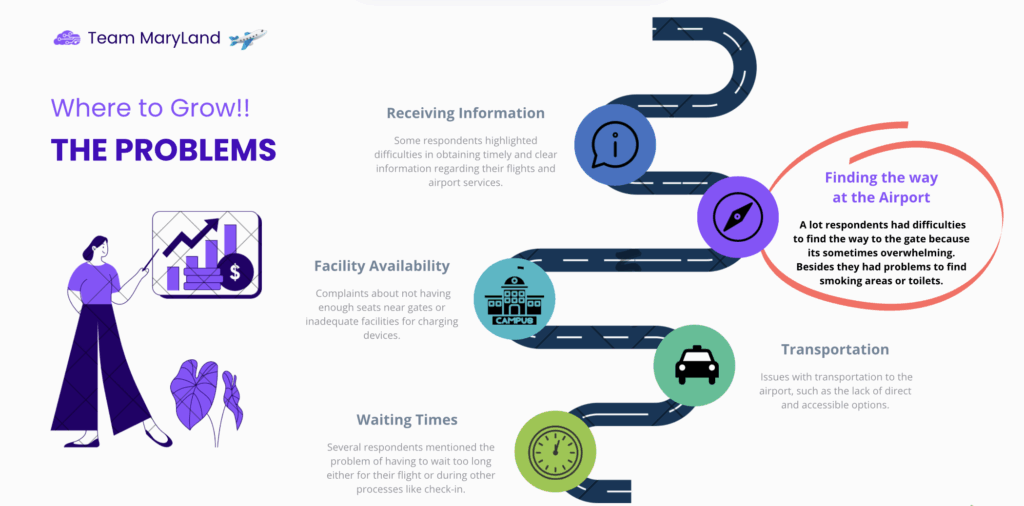
Identify core friction points in the airport journey through qualitative user research.
Develop a user-centered digital navigation tool using AR and QR code access.
Support multilingual accessibility for a diverse global audience.
Reduce user anxiety and time spent navigating terminals.
Create a prototype that could integrate seamlessly with existing airport infrastructure.
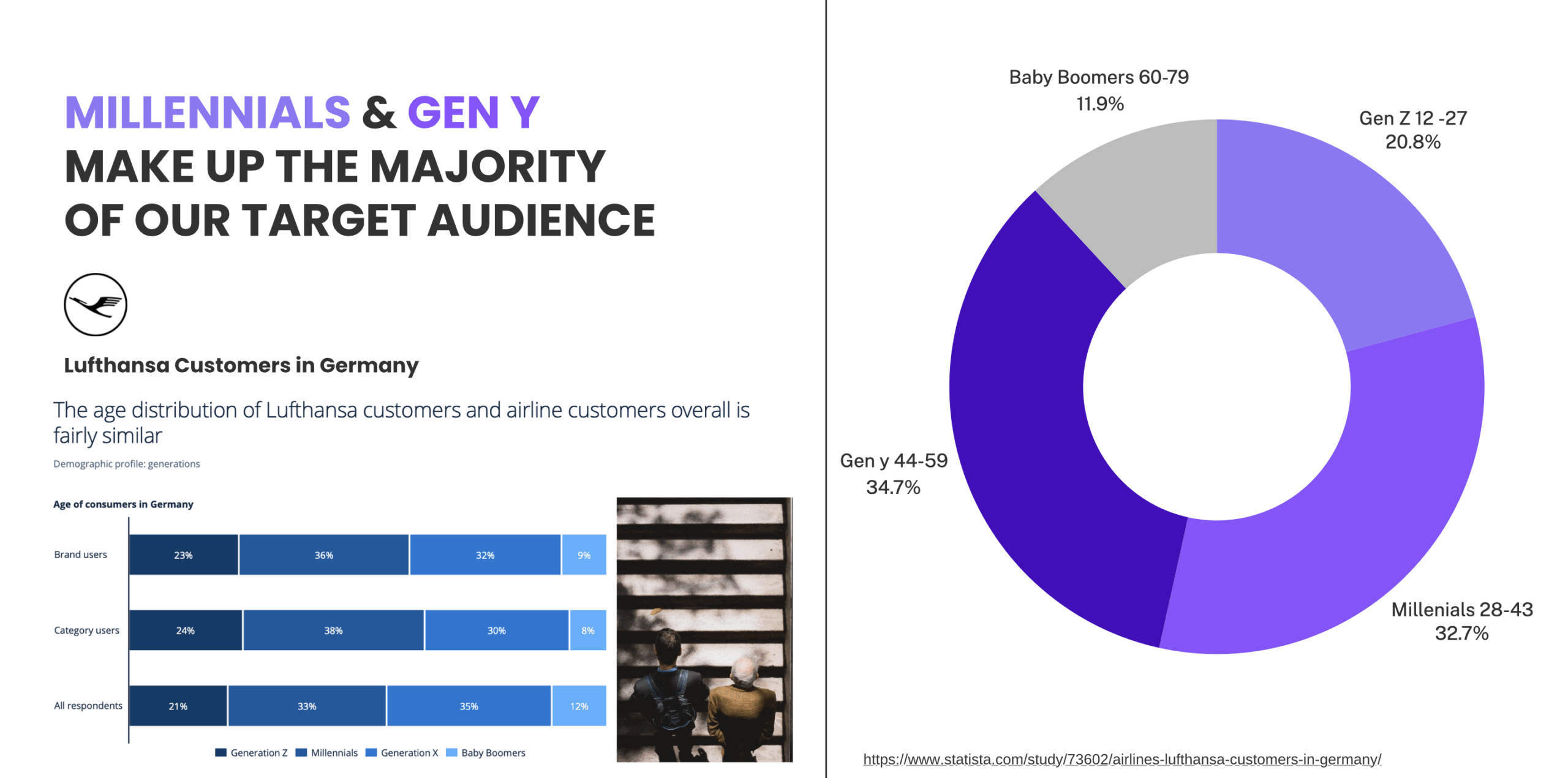
To deeply understand the user experience at airports, we adopted a human-centered design approach. This phase focused on uncovering real user frustrations, motivations, and behavior patterns during the airport journey. Our process combined qualitative research, empathy-driven insights, and collaborative ideation techniques to inform our solution strategy.
Using the “How Might We” framework, our team ran several brainstorming sessions (Magic 8 method) to translate pain points into design opportunities.
Example prompts:
We synthesized these findings into actionable design directions, eventually leading to the concept of NavEase—an AR-based navigation solution powered by QR code access.
We interviewed 8 interinermtion sittes with 8 international travelers (aged 20-46) from countries like India, Germany, USA and Chinà. The goal woiu to explore their axport experiences-especially during wayfinding and boarding.
Key UX techniques used:
Empathy Mapping to understand emotional states (e.g., stress, frustration)
Persona Development (e.g., Emily, a nervous traveler with limited airport experience)
Customer Journey Mapping to visualize key touchpoints and emotional highs/lows
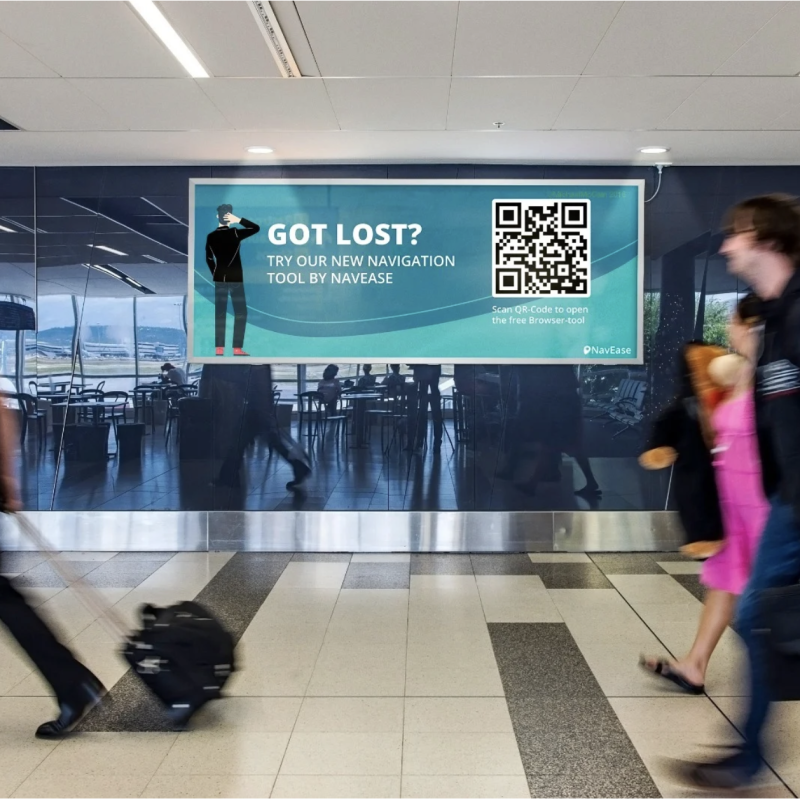
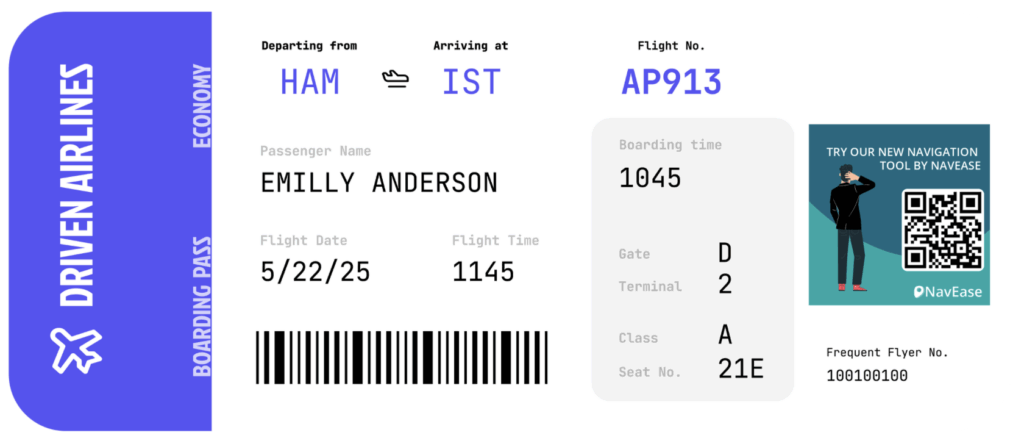
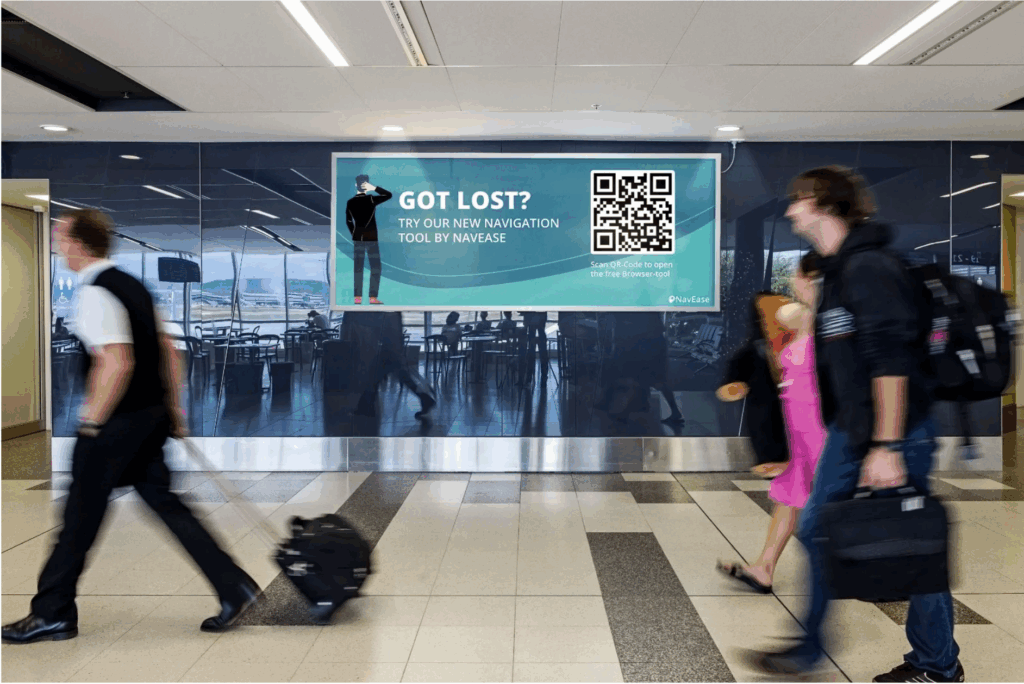
NavEase is a smart AR navigation assistant that helps travelers find their way through airports with ease. By scanning a QR code—available on boarding passes or digital billboards—users instantly access real-time navigation via their smartphone camera. The tool supports multiple languages and provides location-based service suggestions, making the journey smoother for everyone.
Key Benefits:
Stress-free, intuitive airport navigation
Saves time and boosts travel confidence
Multilingual and personalized guidance
NavEase is a smart AR navigation assistant that helps travelers find their way through airports with ease. By scanning a QR code—available on boarding passes or digital billboards—users instantly access real-time navigation via their smartphone camera. The tool supports multiple languages and provides location-based service suggestions, making the journey smoother for everyone.
Key Benefits:
Stress-free, intuitive airport navigation
Saves time and boosts travel confidence
Multilingual and personalized guidance