This project focused on repositioning the iconic Volkswagen Bulli van using modern brand equity and pricing frameworks. The goal was to evaluate consumer perception and craft a refined positioning strategy that balances heritage, innovation, and sustainability.
Volkswagen Origins & Iconic Beginnings
Volkswagen’s story began in 1934 with the development of the “Käfer” (Beetle) — a symbol of accessible mobility for everyday families. The company was officially founded in 1937 as “Gesellschaft zur Vorbereitung des Deutschen Volkswagens mbH”, later renamed Volkswagenwerk GmbH in 1938. Its main production plant was built in Wolfsburg, marking the start of what would become one of the world’s most recognized automotive brands. The Beetle’s launch in the late 1930s laid the foundation for a brand built on simplicity, reliability, and community connection.
❗ Problem / Challenge
Despite its nostalgic charm and cultural symbolism, the VW Bulli needed to reconnect with new generations of buyers in a market now dominated by electric vehicles and minimalist lifestyle choices. The challenge was to understand:
How do people perceive the Bulli today?
What emotional and functional levers can strengthen its positioning?
How can pricing reflect both legacy and innovation?
Why Purpose of Volkswagen Bulli's Positioning
Creating a Unique Brand Image: To establish VW Bulli as an icon of freedom, adventure, and heritage
Differentiation from Competitors: Positioning the Bulli as more than just a vehicle, but a symbol of lifestyle and cultural movement.
Who it Values: Target Audience
Adventurers and Travelers: Individuals seeking the freedom of the open road.
Nostalgia Enthusiasts: People with a fondness for the classic and historic elements of the VW Bulli.
Community Builders: Those who participate in Bulli festivals and value the sense of belonging and shared experiences.
How - The Process of Positioning
Brand Identity Creation: Leveraging the Bulli’s iconic design and historical significance.
Engaging Content: Using thought leadership to share expertise on travel, road trips, and the Bulli’s legacy.
Community Engagement: Hosting and promoting Bulli festivals to strengthen the emotional bond with the brand.
What
Product & General Information
VW Bulli : A classic van known for its distinctive design, durability, and versatility.
Product Offerings : Various models catering to different needs, from modernized versions to classic restorations.
Brand Heritage : Over 70 years of history, symbolizing freedom and adventure.
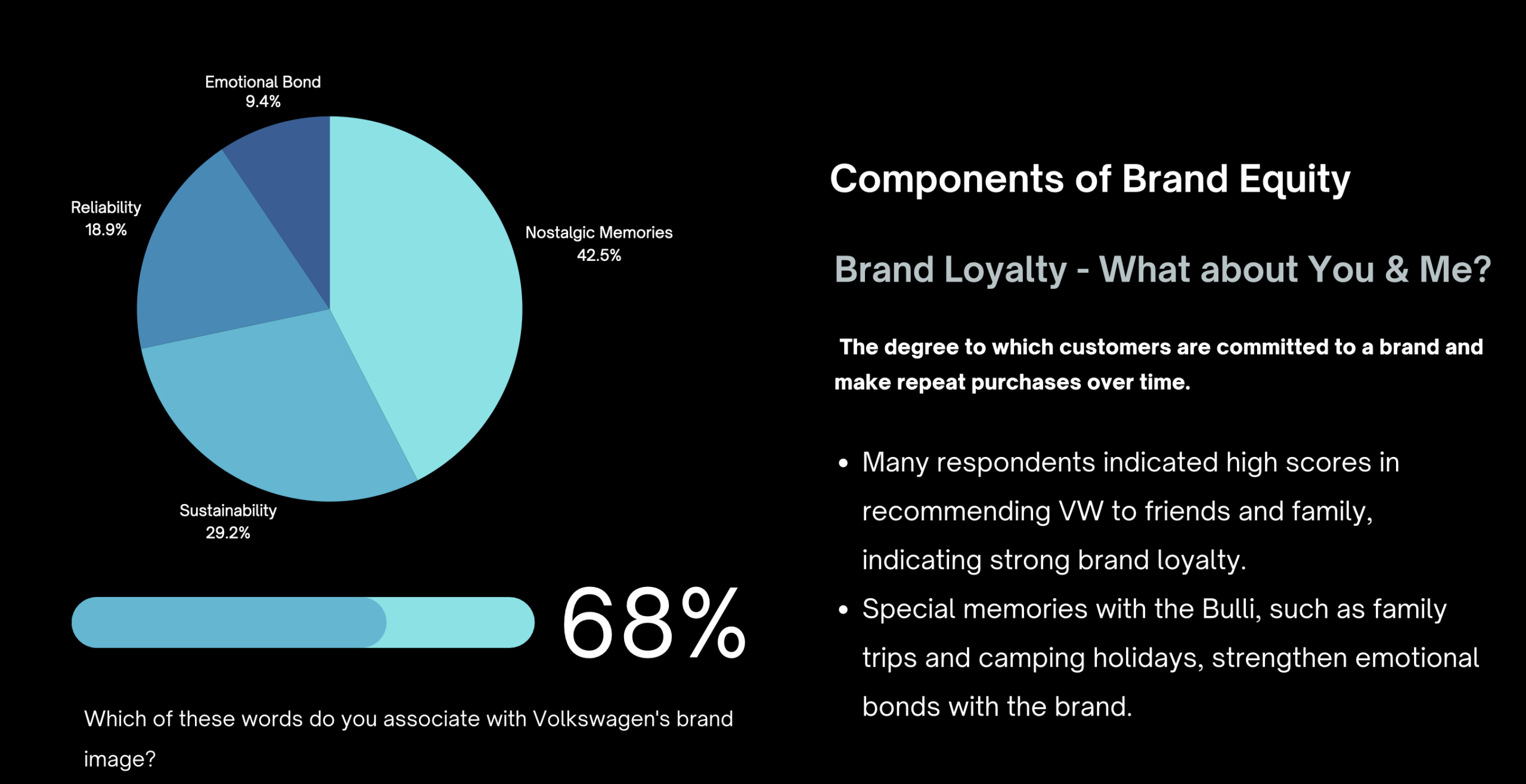
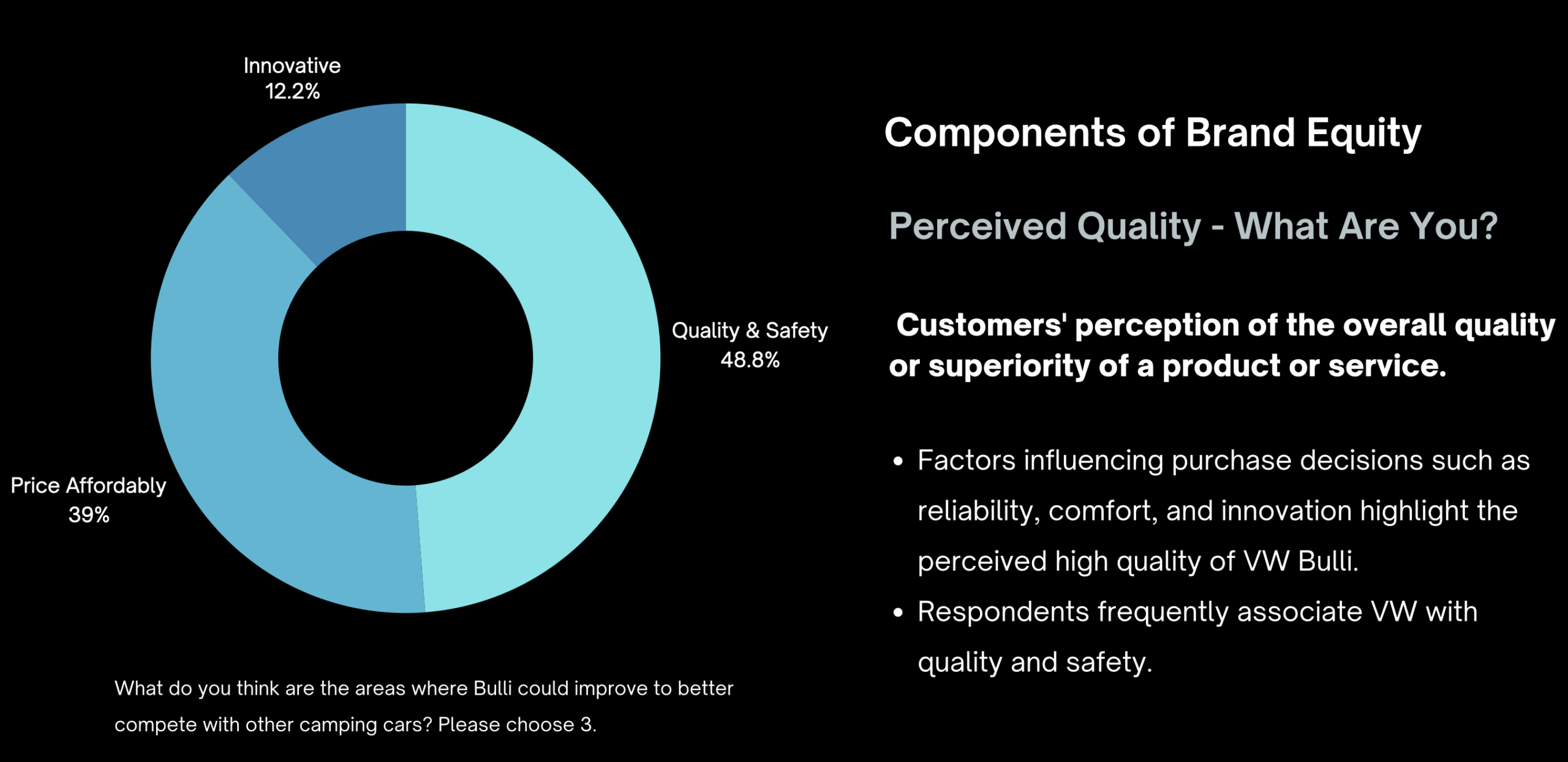
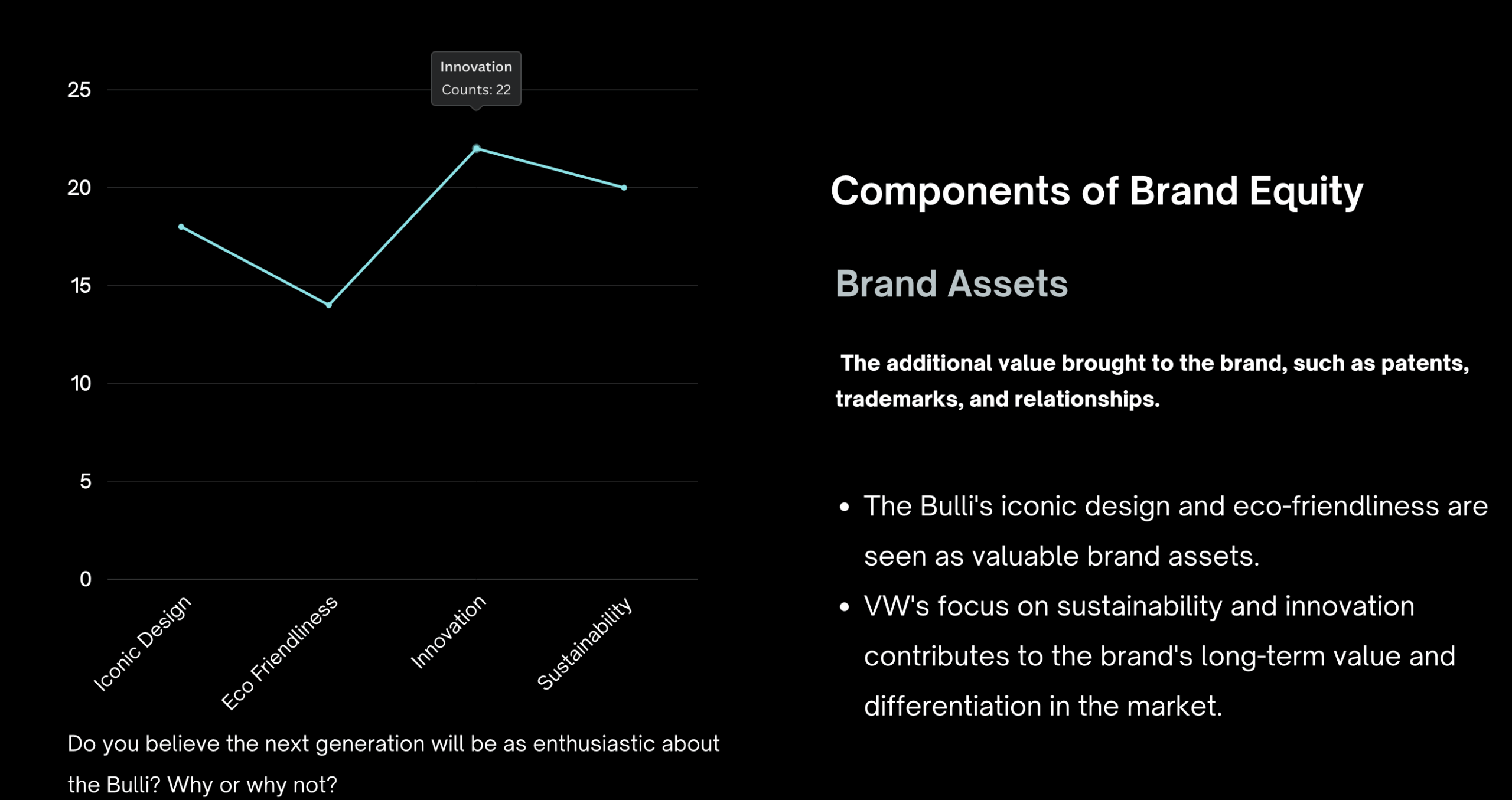
Questionnaire Reveals Key to Brand Equity
Values Semantic Network & Competitor Analysis
Volkswagen Id Buzz
V.s.
Ford Custom
Positioning
Lifestyle and electric vehicle segments.
Target Audience
Consumers seeking style, innovation, and eco-friendliness.
Justification
Higher price reflects advanced electric technology, unique design, and brand
legacy of the iconic VW Bus.
Volkswagen ID Buzz
Pricing Strategy
Ford Custom
Pricing Strategy
Positioning: Commercial vehicle segment.
Target Audience: Small businesses and commercial users needing practical, versatile transport solutions
Justification: Priced to offer value for money, focusing on functionality & reliability for volume sales.
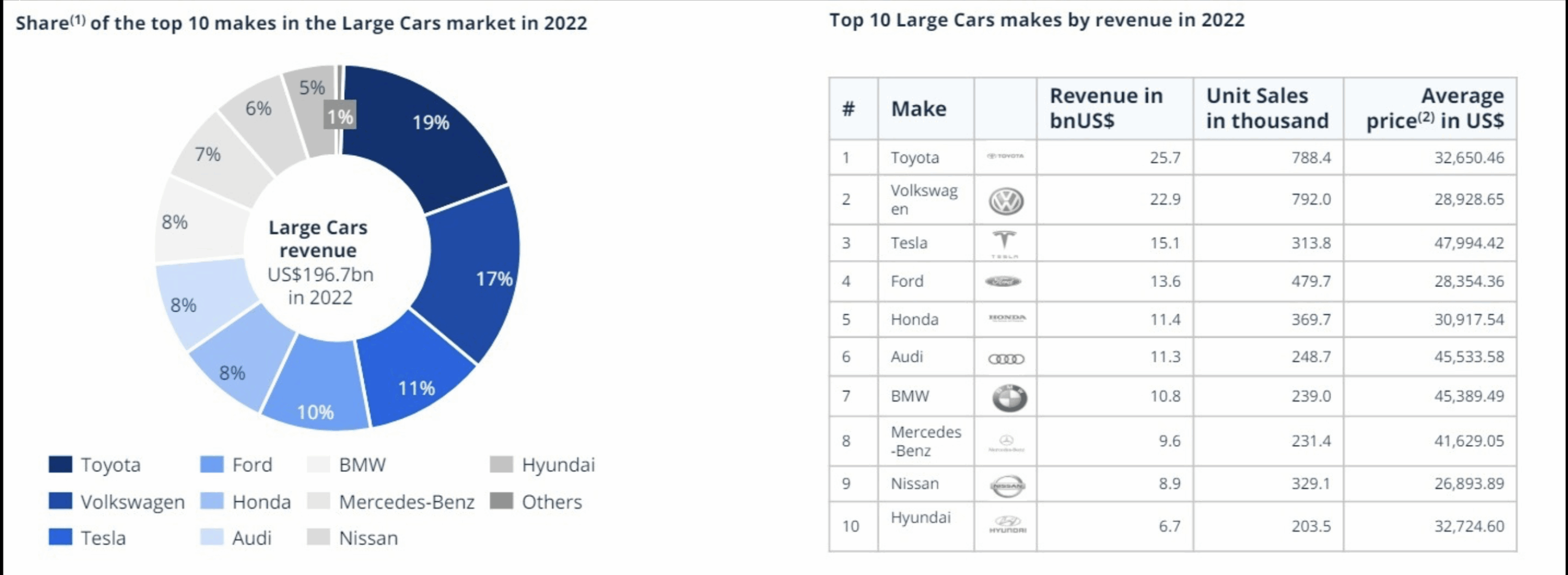
Conclusion Market & Value Comparison
$40,000. Higher Trims/Features: Can exceed $50,000, depending on additional options and features.
Targets lifestyle and eco-friendly markets with a focus on innovation and style.